Hopefully you had a happy Halloween, with lots of adorable trick-or-treaters coming by to show off their costumes in exchange for a bit of candy. One of my favorite things about Halloween is the way many neighborhoods come together and get into the spirit of the holiday, preparing for a few hours of delighting local kids from door to door. It’s a nice way for people to feel part of a community.
In that spirit, rather than spending this post railing about all the bad things the Trump administration is doing, I thought instead I could share about some of the things public health has already gotten right—because there’s a lot!
First, let’s talk vaccines.
Look at this dramatic figure, shared in September by the Center for American Progress.
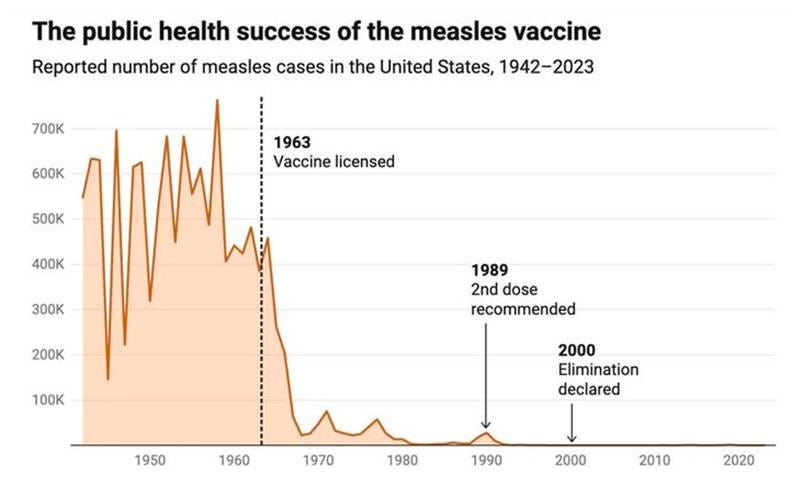
How lucky are we to live in a time where we can be vaccinated against measles? It’s a super transmissible disease (spread far more easily than COVID, for example), and can cause serious health complications or even death. Now, of course, despite being 25 years since elimination was declared in the US, we are experiencing a real upsurge of active outbreaks. But, if you were born before 1957 or vaccinated since 1967, in almost all cases you’re protected for life and have nothing to worry about. If you aren’t sure or are worried you might not have immunity, you can talk to your doctor and as for a “titer” to test your measles immunity level, and most people can be vaccinated as an adult if necessary. This is something to celebrate!
Most of us celebrated the amazing achievement of COVID vaccines becoming available only a year or so after the novel virus was identified—that was truly an incredible feat of science and government collaboration. Plus there are still plenty of people alive who remember what an extraordinary moment it was when the polio vaccine started rolling out, saving lives and preventing paralysis and other problems for thousands of children. But it’s not just COVID and polio and measles vaccines we have to celebrate. A recent study found that emergency vaccines distributed through international public health networks (including Gavi’s vaccine stockpiles, which hopefully someday soon the US will again help sustain) have saved 327,000 lives and generated $32 billion in economic gains by reducing deaths from infectious disease outbreaks by nearly 60% between 2000 and 2023. Amazing!
Another way to look at the impact public health has had is to look at child mortality.
This graph from Our World in Data could use a little sprucing up to make it easier to read, but I think everyone can grasp the point. Until around 1875 or so, between 45-50% of children in the world died before finishing puberty (~age 15). By 1950, that number had dropped to 27% of young people dying by age 15 (still shockingly high). In 2020, that number was down to 4.2%.
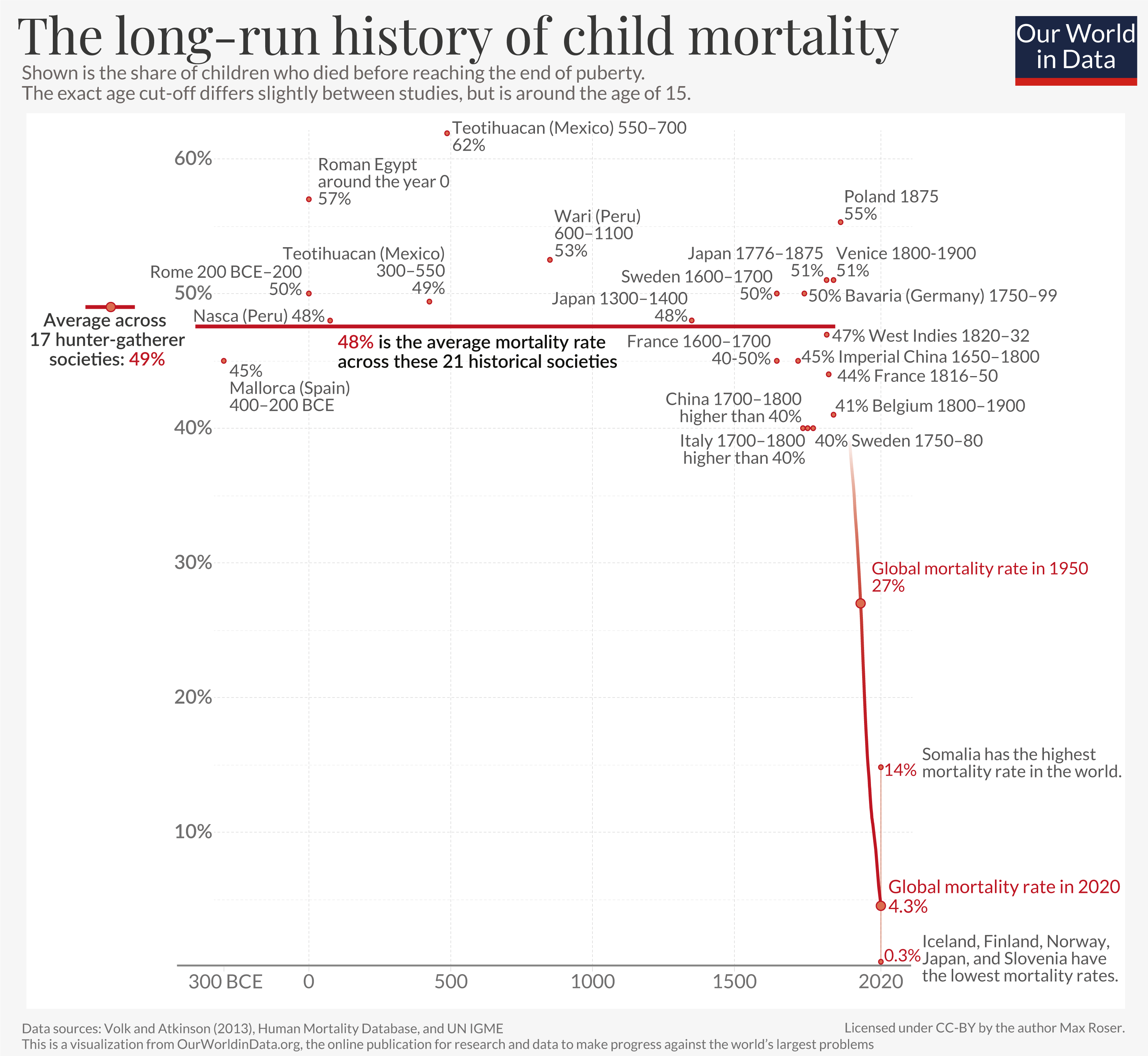
In the US in 2023, only 0.8% of children died by age 15. This dramatic decline in child mortality around the globe has resulted from advances in medicine—both medications/treatments as well as healthcare advances that keep many more newborns alive, even when born prematurely or very sick—but also very much from public health interventions like vaccinations, nutrition, sanitation, clean water, refrigeration, and more.
As Aaron E. Carroll noted in the NY Times, RFK Jr. talks a lot about how kids were healthier in the 1950s and ’60s than they are today, but “a child with acute lymphoblastic leukemia had almost no chance of survival in 1960; today, the vast majority can expect to be cured… Yes, chronic disease is more common in children now, but that reflects both progress and new challenges. The biggest killers used to be infectious diseases; the deadliest of those have largely been eliminated.”
How lucky are we to be born (and have kids) in the last century, and not the ones that came before? The timing of our birth might be luck, but these advancements in health aren’t—they’ve been made possible by huge investments in medical research and public health infrastructure, plus the hard work and devotion of hundreds of thousands of public health professionals working to save lives and improve health. Let’s hope we get back on track to make those investments again, because there’s so much more to be done. But in the meantime, so much existing progress to celebrate!